
The Hobbit (Illustrated Edition By ( By Alan Lee)
21,90 €
Prix Cultura · 25/11/2026Indiqué en stockVoir le produit →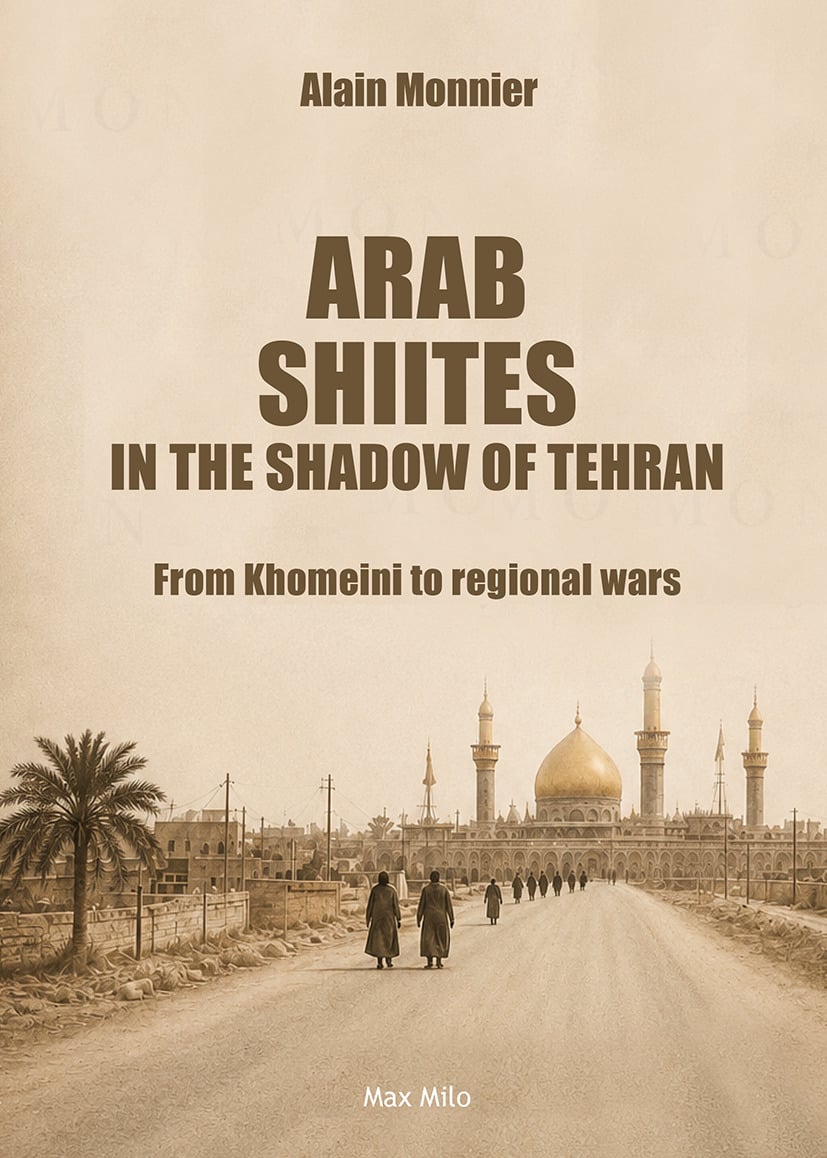
21,90 €
Indiqué en stock · État : Non précisé
Prix du catalogue mis à jour le 25/11/2026.
Importé le 25/11/2026.
Le prix et la livraison définitifs se vérifient dans le panier Cultura. Lien affilié, sans surcoût pour vous.
Iran did not create the Arab ShiitesSince the Iranian Revolution of 1979, the Middle East has often been viewed through a simplistic lens: “Iranian influence” over Arab Shiites. But what does this influence really entail? Are the Shiites of Iraq, Lebanon, the Gulf, or Yemen merely proxies for Tehran, or are they societies rooted in their own histories, their holy cities, their national wounds, and their local struggles?In this clear, dense, and highly relevant historical essay, Alain Monnier shifts the perspective. He does not start from Tehran, but from Najaf, Karbala, Basra, Beirut, Bahrain, Qatif, Saada, and the Straits of Hormuz and Bab el-Mandeb. The author demonstrates that Iran did not create the Arab Shiite worlds: it encountered communities that were already ancient, often marginalized, sometimes humiliated, yet bearers of autonomous religious, social, and political traditions. The manuscript emphasizes a central idea: Arab Shiism is neither a pro-Iranian bloc nor a mere victim of external manipulation, but a constellation of worlds traversed by multiple loyalties. The book’s strength lies in its account of half a century of regional realignments. Iran appears powerful, but never all-powerful. Arab Shiites appear linked to Tehran, but never reducible to Tehran. The reader comes to understand why Iranian influence succeeds when it encounters weak states, wounded communities, and open wars—and why it cracks as soon as national sovereignty and social discontent regain the upper hand.Thoroughly researched and drawing on the author’s work on Hezbollah, political Shiism, and regional conflicts, this book sheds direct light on the most recent crises: the weakening of the Syrian proxy, the disappearance of Hassan Nasrallah, the war in the Red Sea, the role of the Houthis, the confrontation with Iran, and tensions around the Strait of Hormuz.It provides essential insights for understanding the future of the Middle East after the “Iranian half-century.” Alain Monnier is a historian of the contemporary Middle East, specializing in political Shiism, Hezbollah, and regional realignments linked to Iranian influence. He holds a Ph.D. in contemporary history from the University of Paris Nanterre, and his dissertation focused on Hezbollah’s ideology and communication strategies, as well as the movement’s “Lebanonization” process.His work focuses on the relationships between religion, power, war, and political communication in contemporary Shiite societies. He has published several articles on Hezbollah, the doctrine of wilâyat al-faqîh, Ashura ceremonies, social media within the Lebanese Shiite movement, Iraqi Shiites, and Iranian influence in the Middle East.
Description fournie par Cultura, qui peut contenir des appréciations commerciales. Elle ne constitue pas un avis ou un test Comparomax.
Non classé. Proximité de catégorie et de prix ; vérifiez le format et l’usage avant de comparer.
21,90 €
Prix Cultura · 25/11/2026Indiqué en stockVoir le produit →
21,90 €
Prix Cultura · 25/11/2026Indiqué en stockVoir le produit →
21,90 €
Prix Cultura · 25/11/2026Indiqué en stockVoir le produit →
21,90 €
Prix Cultura · 25/11/2026Indiqué en stockVoir le produit →Une offre Cultura est suivie pour cette référence. Le bouton mène à sa fiche produit exacte via Awin.
Nous ne pouvons pas l’affirmer avec un seul marchand suivi. Le prix indiqué vient du catalogue Cultura à la date affichée.
L’import contrôle la présence d’une image, d’un prix et de liens correspondant au programme Cultura. Les informations descriptives restent celles du marchand ; les caractéristiques fabricant ajoutées sont explicitement sourcées.