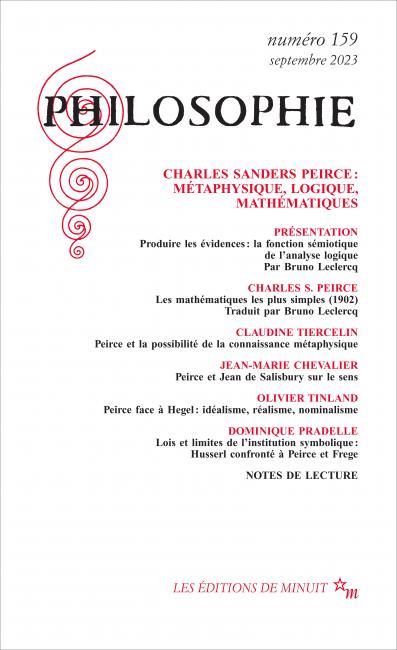
Revue Philosophie n.159 : Charles Sanders Peirce : métaphysique, logique, mathématiques
11,58 €
Prix Cultura · 19/11/2026Indiqué en stockVoir le produit →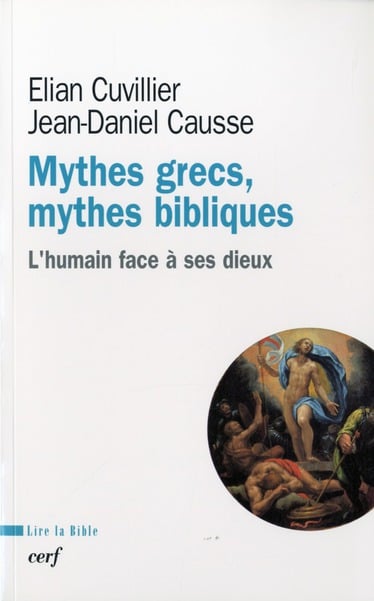
11,58 €
Indiqué en stock · État : Non précisé
Prix du catalogue mis à jour le 19/11/2026.
Importé le 19/11/2026.
Le prix et la livraison définitifs se vérifient dans le panier Cultura. Lien affilié, sans surcoût pour vous.
Perçu sans lien avec l'histoire et dénué de toute vérité, le mythe est souvent identifié à une fable ou une légende. Les auteurs de cet ouvrage, en se distinguant de cette manière de voir, comprennent le mythe comme rapport singulier à la vérité. Les grands récits de la Bible, comme aussi les textes majeurs de la Grèce antique, sont traversés par la question centrale de savoir comment dire l'origine : l'origine des dieux, du monde, du mal, de la mort, de l'humanité, de l'histoire de chaque individu. Le mythe y répond par un récit, mais un récit qui indique que l'origine n'a pas de commencement chronologique repérable et qu'elle échappe au pouvoir de la langue. C'est pourtant l'impossible à dire que le mythe entend dire, non pour en annuler le caractère indicible, mais pour le saluer et recueillir ses multiples effets imaginaires et langagiers. Quelle fonction attribuer aux mythes ? Les Grecs ont-ils cru à leurs mythes ? Comment opère le mythe biblique dans l'Ancien Testament et dans le Nouveau Testament ? La résurrection du Christ appartient-elle - et si oui, comment - au registre du mythe ? En quoi le mythe est-il le langage d'un événement qui fait origine pour un être humain ? Telles sont quelques-unes des questions traitées, ici par Jean-Daniel Causse, Elian Cuvillier, Patrick Guyomard, Dany Nocquet, Catherine Salles et Pierre Sauzeau.--Perceived as having no link with history and being devoid of all truth, the myth is often identified with the fable or the legend. The authors of this book, on the contrary, understand the myth as having a unique rapport with the truth. The great narratives in the Bible, like the major texts of Ancient Greece, are concerned with the central question of origins: the origin of the Gods, of the world, of evil, of death, of humanity and the history of each individual. The myth responds with a story, but a story that tells us the origin has no identifiable chronological beginning, and that it escapes the power of language. Yet it is impossible to put into words what the myth strives to say, not in order to cancel out its inexpressible character, but to hail it and contemplate its rich imaginary and linguistic effects. What function should we attribute to myths? Did the Greeks believe their myths? How does the biblical myth operate in the Old and New Testaments? Does the resurrection of Christ belong to the domain of myth - and if so, in what way? In what respect is the myth the language of a founding event for human beings? These are a few of the questions treated here by Jean-Daniel Causse, Elian Cuvillier, Patrick Guyomard, Dany Nocquet, Catherine Salles and Pierre Sauzeau.
Description fournie par Cultura, qui peut contenir des appréciations commerciales. Elle ne constitue pas un avis ou un test Comparomax.
Non classé. Proximité de catégorie et de prix ; vérifiez le format et l’usage avant de comparer.
11,58 €
Prix Cultura · 19/11/2026Indiqué en stockVoir le produit →
11,58 €
Prix Cultura · 19/11/2026Indiqué en stockVoir le produit →
11,58 €
Prix Cultura · 19/11/2026Indiqué en stockVoir le produit →
11,58 €
Prix Cultura · 19/11/2026Indiqué en stockVoir le produit →Une offre Cultura est suivie pour cette référence. Le bouton mène à sa fiche produit exacte via Awin.
Nous ne pouvons pas l’affirmer avec un seul marchand suivi. Le prix indiqué vient du catalogue Cultura à la date affichée.
L’import contrôle la présence d’une image, d’un prix et de liens correspondant au programme Cultura. Les informations descriptives restent celles du marchand ; les caractéristiques fabricant ajoutées sont explicitement sourcées.